What Is Kata? Meaning, Purpose and How It Differs From Sparring
· Pavika Editorial
Also available in: हिन्दी
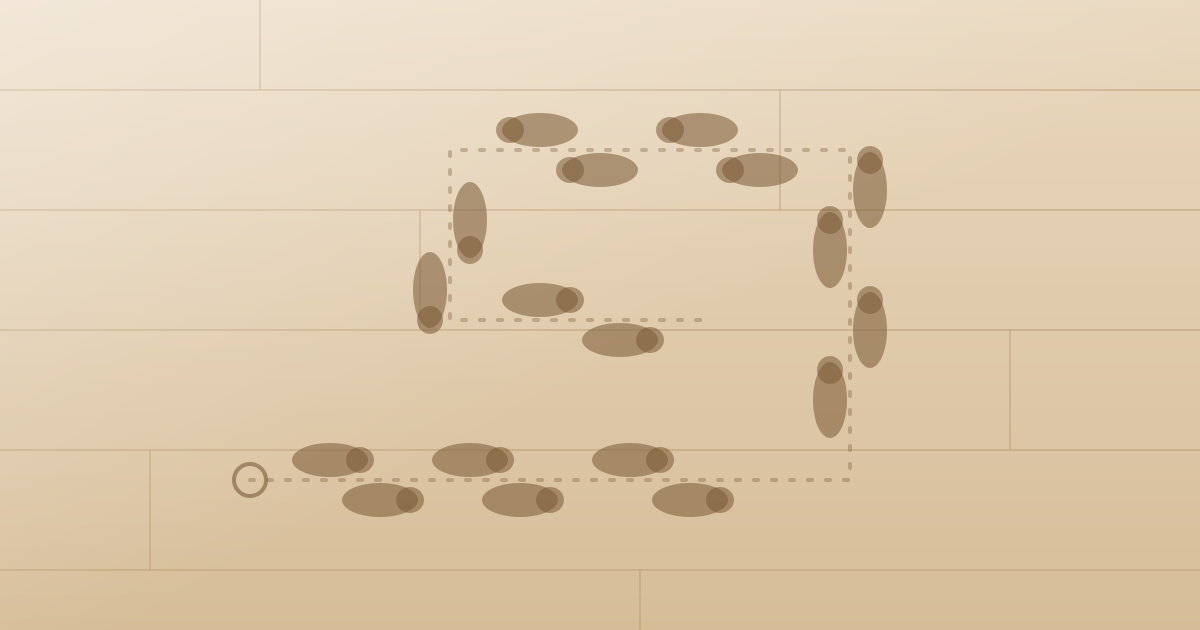
Kata looks like shadowboxing to many newcomers, but it is something different. This post explains what the word means, why so many arts practise it, and how it differs from sparring. It also covers how to start safely.
Kata means “form”
Kata (型 or 形) is a Japanese word meaning “form”. In martial arts it names a detailed, choreographed pattern of movements. Some arts practise it alone and others with a partner.
The Wikipedia article on kata says these patterns began as teaching and training methods. They help preserve techniques that worked and pass them on. Repeating a kata is meant to make the movements smooth and automatic, so they can be adapted under pressure without hesitation.
In karate, a kata is typically about 20 to 70 moves, with stepping and turning along a set path. The same article puts the number of karate kata at perhaps 100 across all styles, each with small variations. Those are rough estimates, not exact counts.
Where kata is practised
Kata is used by most Japanese and Okinawan arts. The article names karate, judo, kendo and iaidō among them. Similar ideas appear elsewhere. Korean arts such as Taekwondo have their own forms, usually called poomsae or hyeong, and Chinese styles use the term taolu.
How much of a style’s training is kata varies a lot:
- In iaidō, solo sword kata makes up nearly all of the training.
- In karate, kata sits alongside sparring. One explanation is that kata acts as a reference set of moves that you then test against a partner.
- In judo, Kanō Jigorō created most of the several kata, in the late 1800s. They are done with a partner and include techniques banned in competition, such as strikes.
Kata vs free practice
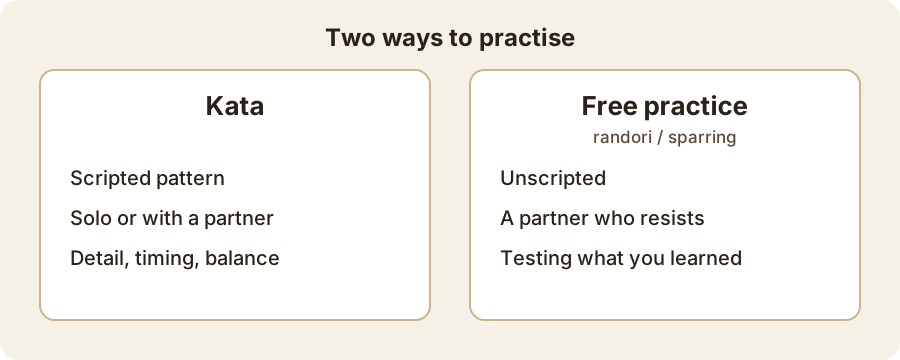
The Judo article describes randori as free practice. Kata is its opposite: a pre-arranged pattern. In judo, nearly all kata are done with a partner, and they can include strikes, which are forbidden in randori.
The two are meant to complement each other, but the balance depends on the art. Judo teaching puts its main emphasis on randori. The Kata article adds that judo de-emphasises kata, usually preparing it mainly for dan grading. The Judo article also notes that one of Kanō’s own teachers placed more weight on kata.
Kata also gives you something to study. Analysing what a kata’s moves mean and how they might be used is called bunkai. The Kata article says a kata can contain more than its obvious techniques.
For the background on karate’s forms, see our short history of karate.
How to start learning a kata
Start with an instructor. A kata is handed down as a set pattern, and small details are easy to get wrong without someone watching. A few habits help any beginner:
- Learn one short form slowly before you try to speed up.
- Count the steps and note where you turn and where you finish.
- Ask your instructor what each section is for.
- Practise in short sessions and rest between them.
Some competitions score kata on style, balance and timing. That is a separate path, and you don’t need it to benefit from the practice.
Safety note
Kata involves physical technique. Train under a qualified instructor, warm up before every session, and respect your limits. Practise at home only in a clear space, and only what your instructor has shown you.