Judo vs Brazilian Jiu-Jitsu: Throws, Ground Work and How They're Related
· Pavika Editorial
Also available in: हिन्दी
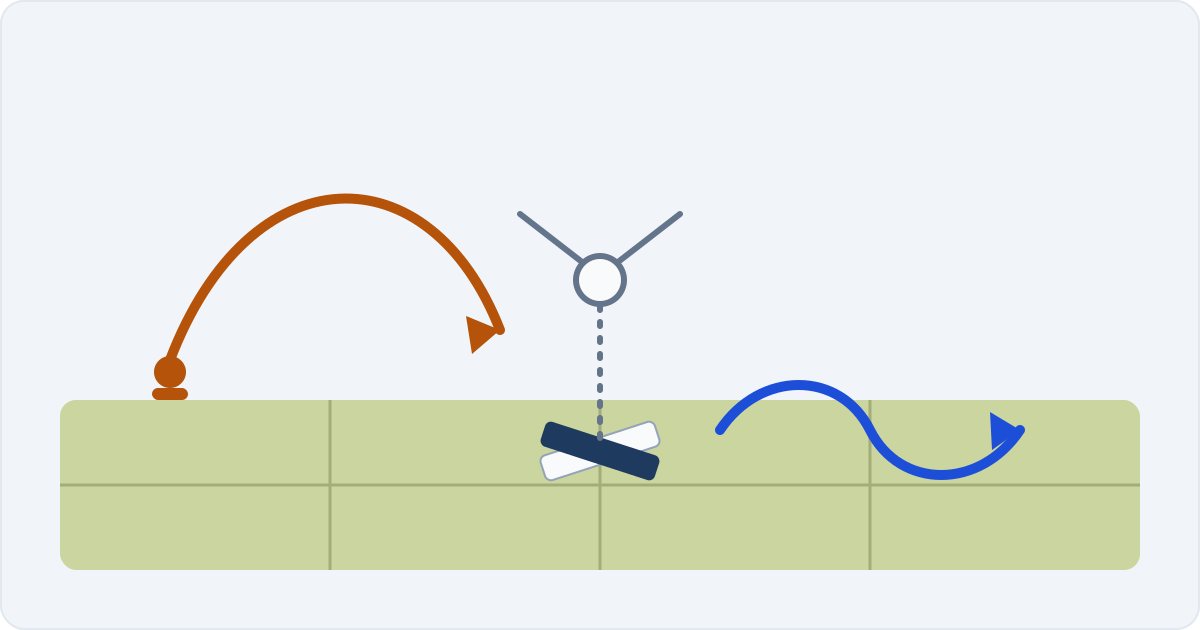
Judo and Brazilian jiu-jitsu (BJJ) look alike at first: two people in uniforms, gripping and wrestling. They are in fact related, but each puts its attention in a different place. Here is where they share a root, where they split, and how to choose a first class.
Common roots: from Kodokan judo to Brazil
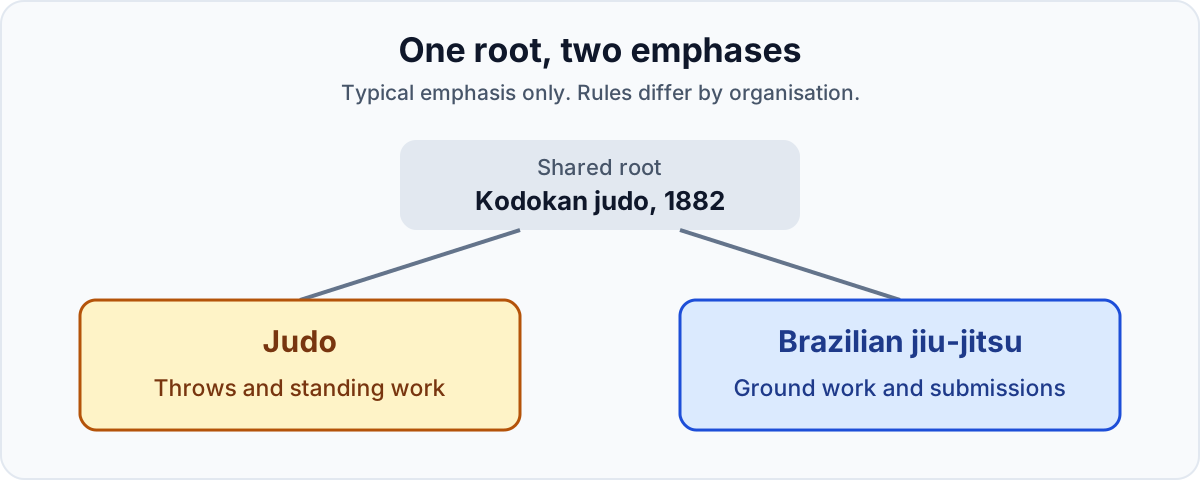
Kanō Jigorō created judo in 1882, drawing mainly on two older jujutsu schools. He removed striking and weapons from training, and he gave free practice (randori) a bigger role than pre-arranged forms.
Judo later reached Brazil. The BJJ article describes Mitsuyo Maeda as a Kodokan judoka who arrived around 1914, when judo was still often called “Kano jiu-jitsu”. The Gracie family became the best-known name in the story that followed.
The details are disputed. The Gracie family says Carlos Gracie learned directly from Maeda. The historian Robert Drysdale argues he was mainly taught by Jacyntho Ferro, who ran Maeda’s school. We can’t settle that here.
What the article does say is that Carlos’s brother Hélio was smaller and struggled with throws and strength-based techniques. He leaned on ground fighting and leverage instead, which became the core of Gracie jiu-jitsu.
Judo: throws first
Judo’s throws (nage-waza) include hand, hip and leg throws, plus sacrifice throws. Each throw has three stages: breaking the opponent’s balance, fitting in, and completing the throw.
Judo also has ground work (katame-waza): pins, chokes and joint locks. Competition rules limit joint locks to the elbow. Strikes are not allowed in competition or free practice.
In competition, a clean throw onto the back with force and control scores ippon and ends the match. A recognised pin held for 20 seconds, or a submission, also scores ippon.
BJJ: the ground is the main stage
BJJ is built on the idea that a smaller person can defend against a bigger one using leverage and body position. Much of the game happens on the ground.
The guard is central. From the bottom, you use your legs to control the opponent and set up sweeps or submissions. Dominant top positions include side control and mount.
Submissions fall into two groups. Chokes target the neck or windpipe. Joint locks include armbars and, under some rules, heel hooks. Training centres on live sparring, called “rolling”.
Rule differences
The BJJ article says BJJ allows heel hooks and knee-reaping, which judo prohibits. Rules vary, though: heel hooks are illegal in gi competition, and many events limit leg locks by belt level.
The same article says that in BJJ, strong positions such as rear mount score points, while in judo a clean throw can win outright. It also notes that BJJ includes “pulling guard”, which judo does not. Judo rule changes reduced ground work over time, while BJJ kept it central.
| Judo | Brazilian jiu-jitsu | |
|---|---|---|
| Origin | Japan, 1882 | Brazil, built on Kodokan judo |
| Main emphasis | Throws and standing work | Ground work and submissions |
| Joint locks | Limited to the elbow in competition | Broader, varying by rules and rank |
| Heel hooks | Prohibited | Allowed under some rules, not in gi |
| Quick win | Ippon by a clean throw | Submission, or points for position |
Choosing your first art
Neither is “better”. The right pick depends on what you enjoy and what is near you.
- Like the idea of throws and standing grips? Try judo first.
- Drawn to leverage and puzzle-like ground work? Try BJJ.
- Unsure? Visit both. Watch a full class, ask about sparring, and notice how the instructor handles beginners.
This post is research-only. We haven’t added our own training notes to it yet.
Safety note
Both arts involve throws, chokes and joint locks. Train under a qualified instructor, warm up before every session, and respect your limits. Tap early and don’t force a technique.